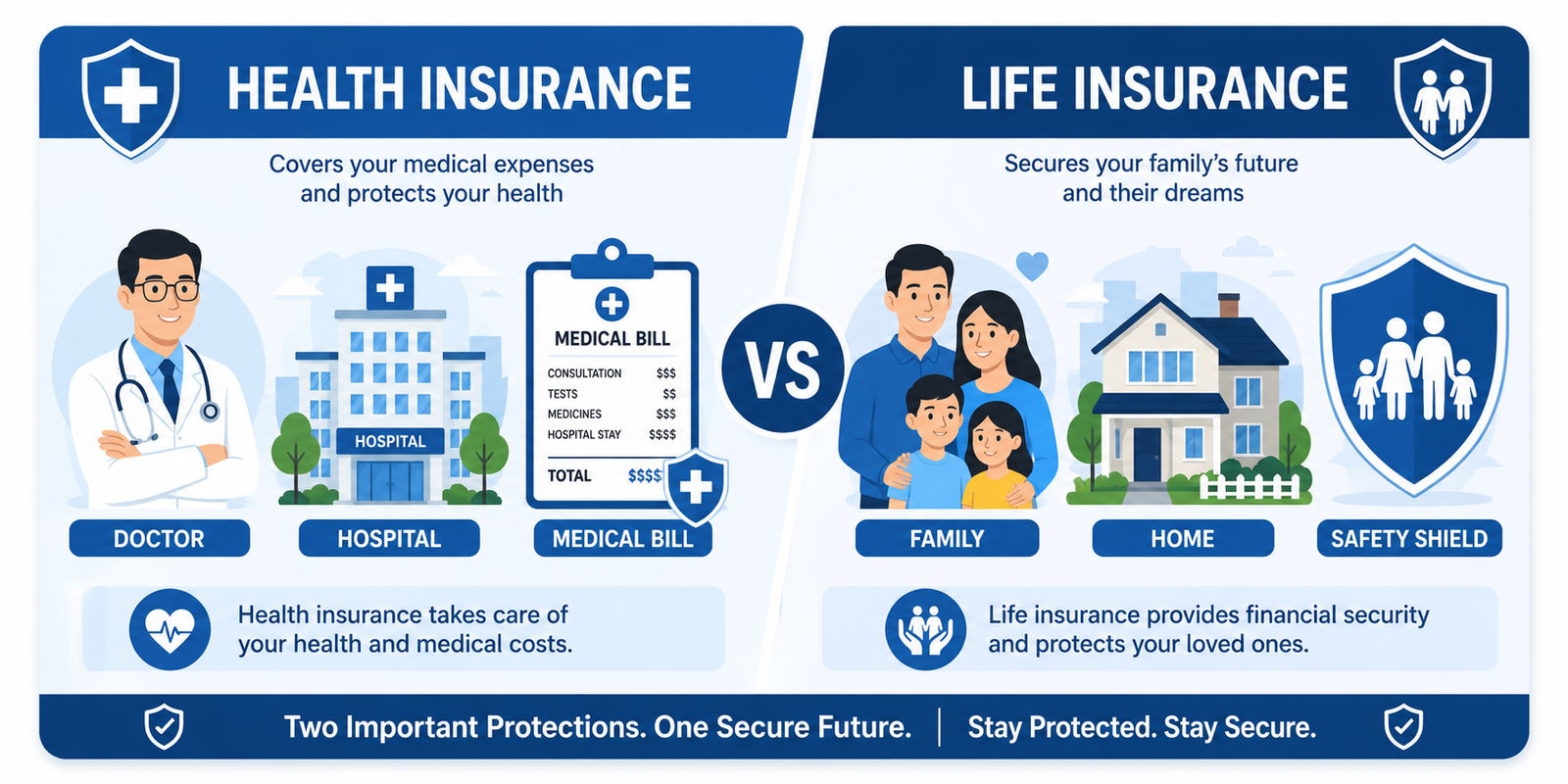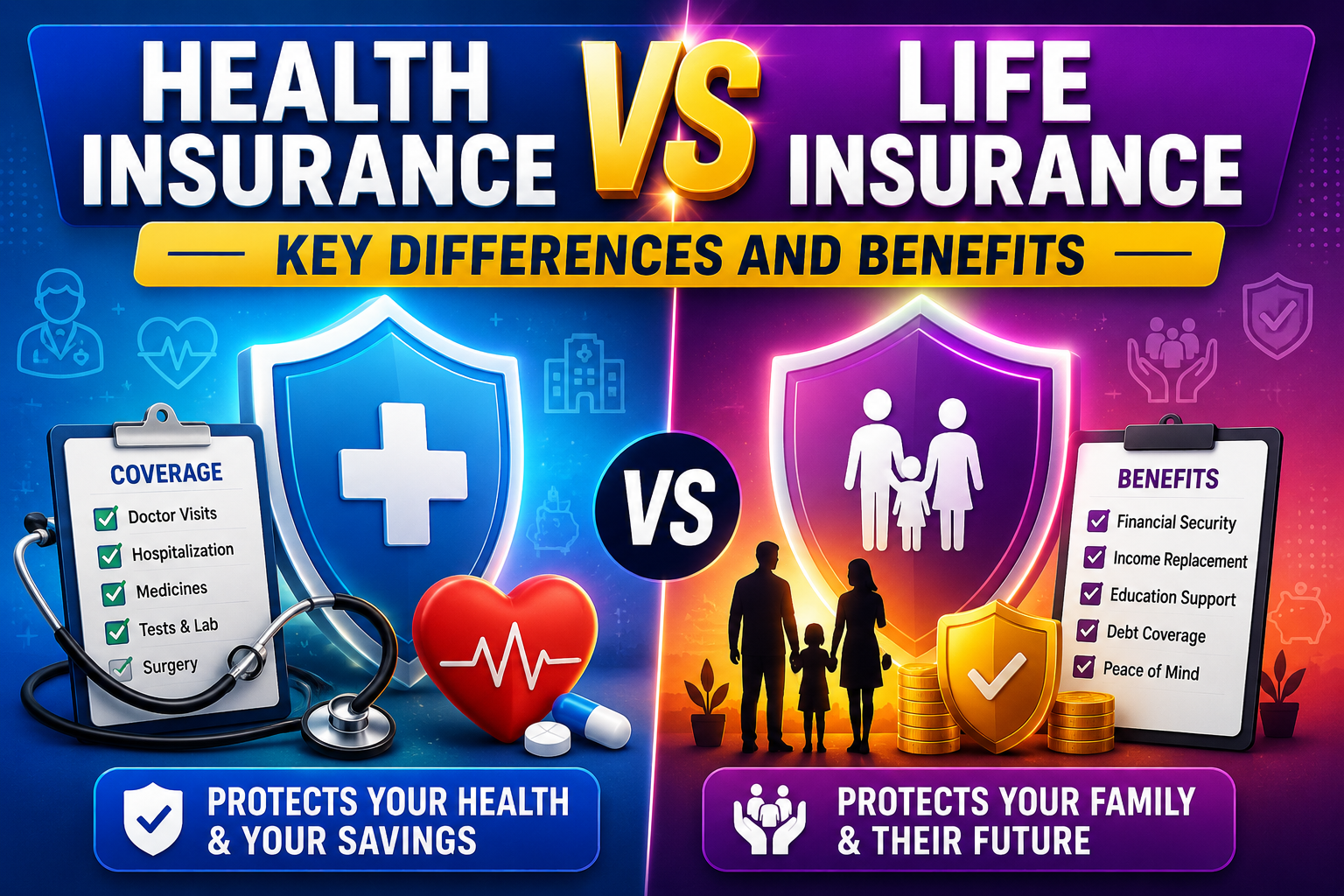
Many people hear the word insurance and think every plan works the same way. I used to think that too. Then I learned that health insurance and life insurance solve two very different problems. One helps when I need care while I am alive. The other helps my family if I pass away. Both can protect money, peace, and long-term plans. However, each one works in its own way.
In this guide, I will explain the real difference between health insurance and life insurance in plain words. I will also show how each policy can help you insure the right part of your life. I will avoid hard terms where I can. When a term matters, I will explain it simply. By the end, you should know what each insurance plan does, when you may need it, and how to choose wisely.
Insurance Basics: What Health Insurance and Life Insurance Really Mean
Insurance is a deal between you and a company. You pay a fixed amount, often each month. In return, the company helps pay for certain costs. With health insurance, the cost is linked to medical care. With life insurance, the cost is linked to death support for your family. So, both plans protect against risk, but the risk is not the same.
Health insurance helps pay bills for doctor visits, tests, surgery, medicine, and hospital stays. It can also cover care before a health issue gets worse. Life insurance pays money to your chosen person after your death. This person is often called a beneficiary. Because of this, life insurance does not pay for your doctor visit. It supports your loved ones when you cannot provide income.
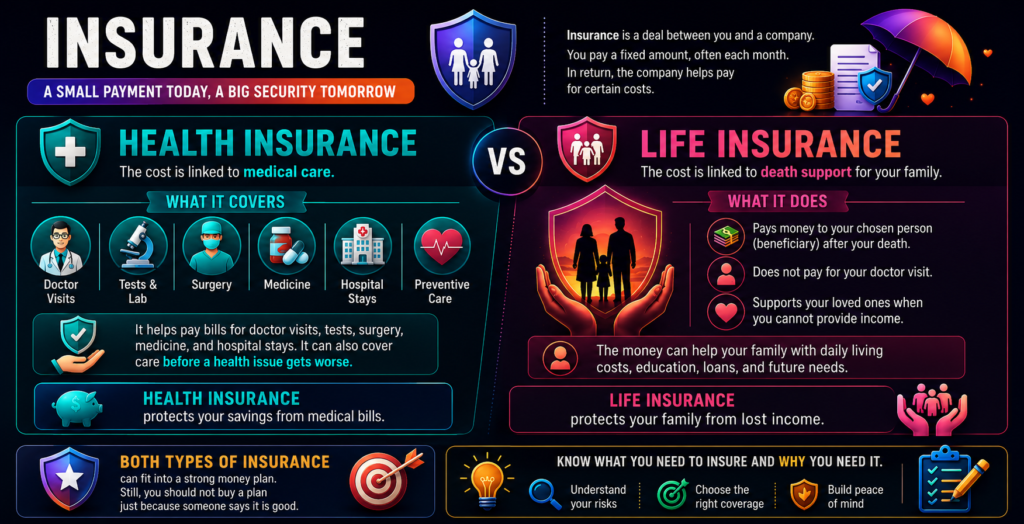
Think of it like this. Health insurance protects your savings from medical bills. Life insurance protects your family from lost income. Both types of insurance can fit into a strong money plan. Still, you should not buy a plan just because someone says it is good. You should know what you need to insure and why you need it.
Health Insurance: How This Insurance Helps With Medical Costs
Health insurance is made for health care costs. If I get sick, hurt, or need care, this plan can help reduce my bill. For example, a hospital stay can cost a lot without insurance. A good plan can pay part of that cost, based on the policy rules. However, I may still need to pay a deductible, co-pay, or share of the bill.
A deductible is the amount I pay before my health insurance starts paying. A co-pay is a set fee for some care, like a doctor visit. Co-insurance means I pay a share of the cost, while the company pays the rest. These terms sound dull, but they matter. They show how much I may pay even after I insure myself with a plan.
Health insurance can also help with regular care. Many plans cover checkups, vaccines, tests, and some screenings. This matters because early care can stop small problems from becoming costly. For example, a simple test may find a health issue early. Then treatment can start sooner. So, this type of insurance does more than help during a crisis.
Health Insurance Example From Daily Life
Let me share a simple example. A friend of mine had stomach pain for several days. He thought it was nothing. Then the pain got worse, and he went to a hospital. The bill included tests, scans, medicine, and a short stay. Without health insurance, that bill would have hit his savings hard. Because he had a plan, the insurance company paid a large part.
This example shows why health insurance can matter at any age. Young people may feel healthy, but sudden health issues can still happen. Also, medical costs often rise each year. So, a plan can help protect a person from surprise costs. It does not remove every cost, but it can make the cost easier to handle.
Life Insurance: How This Insurance Protects Your Family
Life insurance works in a different way. It does not focus on medical bills. Instead, it pays money to your family or chosen person after your death. This money can help pay rent, loans, school fees, food, and daily needs. If people depend on your income, life insurance can be a key way to insure their future.
For example, I may have a spouse, children, or parents who need my income. If I pass away, they may face both grief and money stress. A life insurance payout can give them time and support. It can help them stay in the same home. It can also help them avoid debt. That is the main point of this insurance.
Life insurance often comes in two common forms. One is term life. The other is permanent life. Term life covers a set time, such as 10, 20, or 30 years. Permanent life can last for life if payments stay current. Each type has pros and cons. So, you should compare cost, coverage, and purpose before you insure your family with a plan.
Life Insurance Example From Daily Life
Picture a parent with two young children and a home loan. The parent works full time. The family uses that income for school, food, and bills. If that parent dies, the family may lose the main income source. Life insurance can help fill that gap. The payout can help the family pay the loan and cover daily costs.
This is why life insurance is not only for older people. It can be useful when someone depends on your income. It can also help cover funeral costs and final bills. However, it is not a savings plan for every person. The best choice depends on your age, income, debt, and family needs.
Insurance Comparison: Health Insurance vs Life Insurance
Health insurance and life insurance are both useful, but they do not replace each other. I cannot use life insurance to pay a clinic bill while I am alive. Also, I cannot expect health insurance to pay my family after I die. So, the main difference is the type of risk each plan covers.
| Point | Health Insurance | Life Insurance |
|---|---|---|
| Main purpose | Helps pay medical costs while you are alive. | Pays money to your family after your death. |
| Who gets the benefit? | You get care support through claims or bill payment. | Your chosen person gets the payout. |
| When it helps | During illness, injury, checkups, or treatment. | After the insured person passes away. |
| Common costs | Premium, deductible, co-pay, and co-insurance. | Premium, based on age, health, term, and coverage. |
| Best for | People who want help with health care bills. | People with dependents, debt, or family duties. |
This table makes the difference easier to see. Health insurance supports you during health care needs. Life insurance supports your family after you are gone. Because both cover different risks, many people may need both. Still, the right choice depends on your life stage and budget.
How to Decide Which Insurance You Need First
If money is tight, it can feel hard to choose between health insurance and life insurance. I would first look at my biggest risk. If one hospital bill could harm my savings, health insurance may need quick focus. If my family depends on my income, life insurance may also be urgent. Both choices are about protection, not fear.
Start by asking simple questions. Do I have people who depend on my income? Do I have savings for medical bills? Do I have debt that my family may face? Do I already get health insurance from work? These answers can show where to begin. Then I can insure the most important need first.
- Choose health insurance first if medical bills could hurt your budget. This is common for most people because care can be costly. Even one serious issue can drain savings fast.
- Choose life insurance first if your family depends on your income. This matters more if you have children, a spouse, parents, or loans. The payout can help them stay stable.
- Consider both if you have family duties and health care risk. Many adults need both plans at the same time. A small policy can still give real help.
Also, compare plans before you buy. Do not only look at the monthly price. A cheap health insurance plan may have high out-of-pocket costs. A cheap life insurance plan may offer too little coverage. So, read the terms and ask questions before you insure yourself or your family.
Common Mistakes With Health Insurance and Life Insurance
One common mistake is buying insurance without knowing what it covers. Some people only check the price. Then they feel upset when a claim is denied. With health insurance, you should check hospitals, covered care, waiting periods, and claim rules. With life insurance, you should check the term, payout amount, exclusions, and beneficiary details.
Another mistake is waiting too long. Health insurance may cost more or offer less choice after health issues appear. Life insurance also gets more costly with age. In many cases, younger and healthier people may get better rates. So, waiting can make it harder to insure the same risk later.
A third mistake is buying too little cover. For health insurance, a very low limit may not help enough during a large hospital bill. For life insurance, a small payout may not support a family for long. I like to think about real costs, not just the monthly premium. That helps me choose a plan that works in real life.
Key Terms to Know Before You Insure Anything
Insurance terms can feel confusing, but a few words are worth knowing. A premium is the amount you pay to keep the plan active. A claim is a request for payment from the company. A policy is the written contract. With health insurance, you may see words like network, deductible, and co-pay. With life insurance, you may see beneficiary, term, and death benefit.
A network is a group of doctors, clinics, or hospitals linked to your health insurance plan. A death benefit is the money paid by life insurance after the insured person dies. A beneficiary is the person who receives that money. These simple terms help you read a policy with more trust. They also help you avoid poor choices.
Can Health Insurance and Life Insurance Work Together?
Yes, health insurance and life insurance can work together in one money plan. Health insurance helps protect me from high care costs now. Life insurance helps protect my family later if I am no longer here. Because life can bring both health risks and income risks, both plans can serve a clear purpose.
For example, a working parent may carry health insurance for doctor visits and hospital needs. The same parent may also buy life insurance to protect the children. If the parent gets sick, the health plan helps with treatment. If the parent passes away, the life plan helps the family. This is a simple and useful way to insure two different risks.
Final Thoughts on Insurance, Health Insurance, and Life Insurance
The main difference is simple. Health insurance helps with medical costs while you are alive. Life insurance helps your loved ones after your death. Both types of insurance can protect money, comfort, and family plans. However, each plan has a different job. So, you should not treat them as the same product.
Before you buy any plan, check your needs, budget, and family duties. Read the policy terms with care. Ask questions if something is unclear. Also, review your cover each year because life changes. Marriage, children, debt, and income changes can all affect how much you need to insure. A smart choice today can save stress later.
If this guide helped you understand health insurance and life insurance, bookmark this page now. You may need it again when you compare plans, update your cover, or explain insurance to someone you care about.
FAQs
What is the main difference between health insurance and life insurance?
The main difference is what each plan protects. Health insurance helps pay medical costs while you are alive, such as doctor visits, hospital care, tests, and medicine. Life insurance pays money to your chosen person after your death. Health insurance protects your savings from medical bills. Life insurance protects your family from loss of income and final costs. Both are useful, but they serve different needs.
Do I need both health insurance and life insurance?
You may need both if you want full protection for yourself and your family. Health insurance helps you handle medical costs during your life. Life insurance helps your loved ones if you pass away. If you have children, a spouse, parents, loans, or major bills, life insurance can be important. If medical care is costly where you live, health insurance can also be important. The best answer depends on your budget, health needs, and family duties.
Which insurance should I buy first?
If you must choose one first, look at your biggest risk. If a hospital bill could harm your savings, health insurance should be a top choice. If your family depends on your income, life insurance may also be urgent. Many people start with health insurance because illness can happen at any time. Then they add life insurance when family or debt duties grow. You should compare your needs before you decide.
Is life insurance useful for a single person?
Life insurance can still be useful for a single person, but it depends on the case. If no one depends on your income, you may not need a large policy. However, you may want cover for funeral costs, debts, or support for parents. If you plan to marry or have children later, buying earlier may help you get a lower rate. Still, you should not buy more coverage than you need.
Does health insurance cover death benefits?
Most health insurance plans do not pay a death benefit to your family. They focus on medical costs while you are alive. Some plans may include small extra benefits, but that is not the main purpose. If you want money paid to your family after death, you usually need life insurance. Always read the policy terms because each plan can have different rules and limits.
How much life insurance do I need?
The right amount depends on your income, debts, family size, and future costs. A common way is to think about how much money your family would need if your income stopped. Include rent, food, school fees, loans, and final costs. Also think about how many years they may need support. You can speak with a licensed advisor if you need help, but you should still understand the numbers yourself.
How can I choose a good health insurance plan?
To choose a good health insurance plan, check more than the monthly price. Look at the deductible, co-pay, hospital network, medicine cover, claim process, and yearly limit. Also check if your regular doctor or nearby hospital is included. A plan with a low premium may cost more later if it has high out-of-pocket costs. Pick a plan that matches your health needs and budget.
Can I change my insurance plan later?
In many cases, you can change your insurance plan later, but rules may apply. Health insurance changes may depend on open enrollment, job changes, or special events. Life insurance changes may need a new application, new health checks, or higher premiums. Because rates can rise with age, it is smart to review your needs early. Check your policy terms before you make any change.
Should I bookmark this insurance guide?
Yes, bookmark this guide so you can return to it when you compare health insurance, life insurance, or any plan to insure your future. Insurance choices can feel simple at first, but details matter. Saving this page can help you review the key points before you buy, update, or explain a policy to your family.