Difference Between Health Insurance and Life Insurance
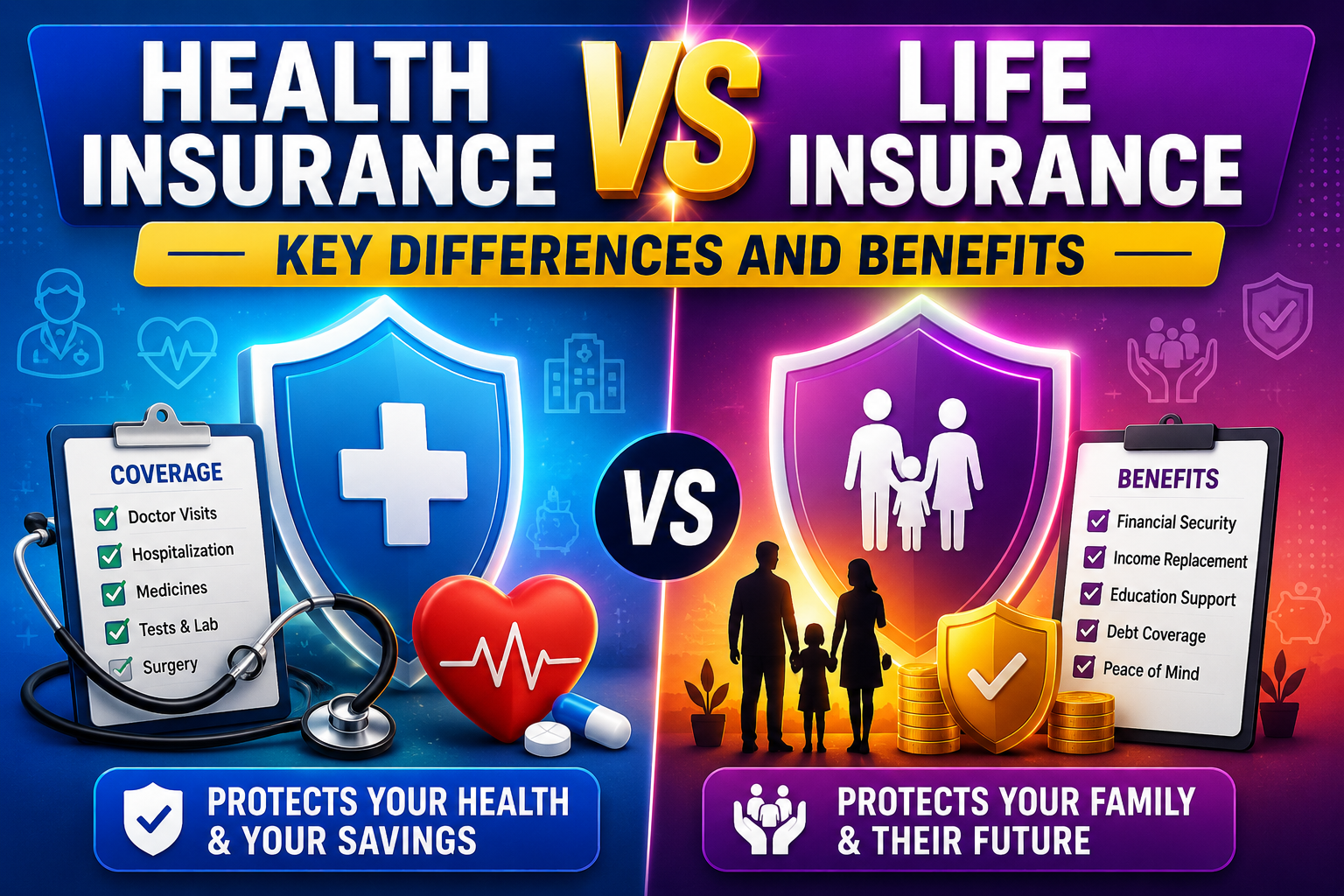
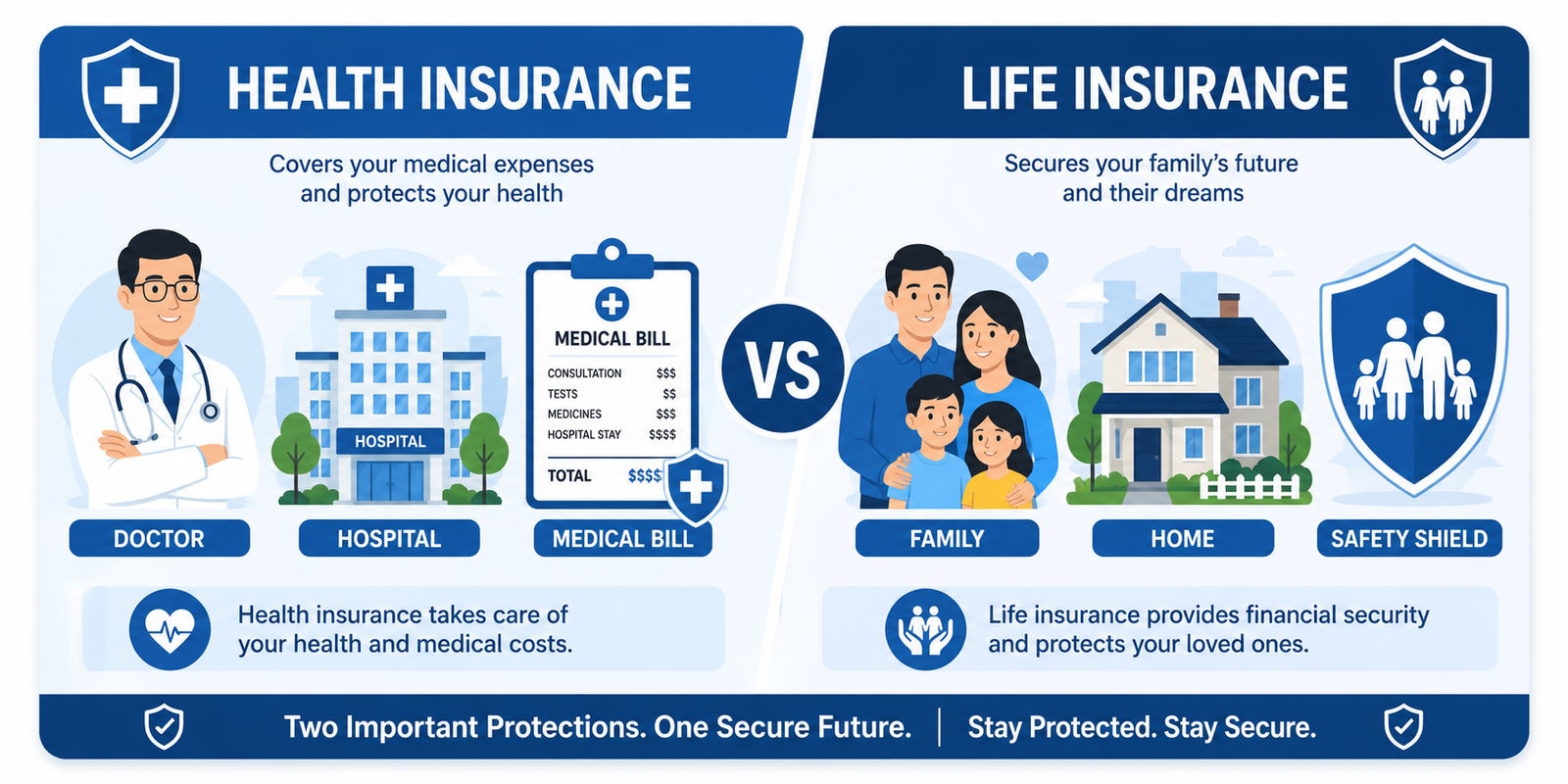
When I first started learning about insurance, I thought every plan worked the same way. I soon found out that health insurance and life insurance solve two very different problems. One helps pay medical bills while I am alive. The other helps my family after I pass away. Both can protect money, but they do it in different ways. If I want to insure my health, I look at doctor visits, hospital costs, and medicine. If I want to protect my family’s future, I look at life cover. This guide explains the key difference in simple words. I will compare both plans, share examples, and show when each one matters. By the end, you can choose insurance with more confidence and less stress.
What Is Health Insurance and How Does It Insure Medical Costs?
Health insurance is a plan that helps pay for medical care. It can cover doctor visits, tests, hospital stays, surgery, and some medicines. I use health insurance when I get sick, have an injury, or need routine care. It does not pay my family after death like life insurance. Instead, it helps me manage health costs while I am living. For example, if I need a small surgery, the bill may be high. A good plan can reduce that cost. However, I may still pay a premium, deductible, co-pay, or coinsurance. That is why I always read the plan details before I insure myself or my family.
In simple terms, health insurance protects my wallet from sudden medical bills. It also gives me access to a network of doctors and hospitals. Some plans cover checkups, vaccines, and health screenings. Because of this, I can treat problems early. Life insurance does not cover these costs. It has a different goal. If I only buy life insurance, I still need a way to pay hospital bills. So, I see health insurance as daily protection for my body and budget. I see life insurance as long-term support for loved ones. Both forms of insurance can work together, but they should not replace each other.
What Is Life Insurance and How Does It Insure Family Income?
Life insurance is a plan that pays money to my chosen person after I die. That person is called a beneficiary. The payment is often called a death benefit. My family can use it for rent, loans, food, school fees, or final costs. Unlike health insurance, this plan does not help with a doctor bill during my life. Its main job is to replace income or support my family when I am no longer there. If my family depends on my income, life insurance can give them time and support. I use it to insure the people I love against a large money gap.
There are different types of life insurance. Term life usually covers a set number of years. It is often cheaper and simple to understand. Whole life and other permanent plans may last longer. They may also build cash value, but they cost more. I choose based on my budget, age, debts, and family needs. Health insurance is about care costs now. Life insurance is about family money later. Both insurance plans have rules, limits, and costs. Before I insure my family’s future, I compare benefits, exclusions, and premium terms. I also check if the cover amount matches real needs.
Health Insurance vs Life Insurance: Main Difference in Simple Words
The main difference is the person who gets help and the time when help arrives. Health insurance helps me while I am alive and need care. Life insurance helps my family after death. This simple idea makes the choice clearer. If I break my leg, health insurance may help pay the hospital. If I pass away, life insurance may help my family pay the mortgage. Both plans can protect savings, but each one handles a different risk. I do not buy one and assume it covers everything. I use each insurance plan for the purpose it was made to serve.
| Point | Health Insurance | Life Insurance |
|---|---|---|
| Main purpose | Helps pay medical bills during life. | Pays family or beneficiary after death. |
| Who benefits? | The insured person gets medical cost support. | The family or chosen person gets money. |
| When it helps | During illness, injury, or routine care. | After the insured person passes away. |
| Best use | To insure against high health care costs. | To insure family income and future needs. |
| Common cost | Premium, deductible, co-pay, coinsurance. | Premium based on age, health, and cover amount. |
This table shows why I do not treat health insurance and life insurance as the same product. The names sound close, but the claims work in different ways. With health insurance, I may file claims many times in one year. With life insurance, the main claim usually happens once, after death. Also, health plans often have doctor networks and medical rules. Life plans focus more on age, health history, policy term, and benefit amount. So, when I insure myself, I first ask what risk I need to cover. Then I choose the right insurance for that risk.
Why I May Need Both Health Insurance and Life Insurance
I may need both because life has more than one money risk. Health insurance helps if I face a large medical bill. Life insurance helps if my family loses my income. For example, imagine I have a spouse, two children, and a home loan. If I get sick, my health plan can reduce treatment costs. If I die, my life plan can help my family stay in the home. One plan protects daily health needs. The other protects long-term family needs. This is why I do not ask which insurance is better. I ask which risk I need to insure first.
Still, I also think about my budget. If money is tight, I focus on the most urgent need. For many people, health insurance comes first because medical bills can arrive at any age. After that, life insurance becomes important when someone depends on my income. Parents, couples with debt, and business owners often need both. A single person with no dependents may still need health cover, but may need less life cover. The right mix changes over time. So, I review my insurance when I marry, have a child, buy a home, or change jobs.
Image Prompt: Create a 1000px by 500px comparison image showing a young family planning insurance at a kitchen table. Add two labeled folders, health insurance and life insurance. Include small icons for hospital bills, income support, children’s school, and home loan protection.
How to Choose Health Insurance Before You Insure Yourself
When I choose health insurance, I start with my real medical needs. I check if my doctor is in the network. I review hospitals near my home. Then I look at monthly premiums and out-of-pocket costs. A cheap premium can look good, but a high deductible can hurt later. I also check medicine cover, lab tests, emergency care, and yearly limits. Life insurance does not answer these health care questions. So, I keep the two choices separate. Before I insure my health, I read the summary of benefits and ask questions. Clear answers help me avoid surprise bills.
- Check the network: A plan may cost less when I use listed doctors. If my doctor is outside the network, I may pay more.
- Compare total costs: I look beyond the monthly price. Deductibles, co-pays, and coinsurance can change the real cost.
- Review medicine cover: Some plans cover certain drugs better than others. I check my current medicines before I choose.
- Look at emergency rules: I need to know what happens in urgent care. Good health insurance should explain this clearly.
I also use trusted sources when I compare plans. For general health plan basics, I may check HealthCare.gov’s plan guide. It explains common costs and plan types in plain language. I also suggest keeping all insurance papers in one folder. This helps during claims, renewals, or tax time. If I own a website, I may link readers to my own guide, such as our complete insurance guide. A clear guide can help people compare health insurance, life insurance, and ways to insure what matters.
How to Choose Life Insurance Before You Insure Your Family
When I choose life insurance, I think about who depends on me. I list my debts, rent or mortgage, child costs, and final costs. Then I think about how many years my family may need support. A small plan may not be enough if my family has large needs. A huge plan may cost too much and strain my budget. I want a balance. Health insurance protects me from medical bills, but life insurance protects loved ones from lost income. Before I insure my family, I choose a benefit amount that makes sense.
I also compare term and permanent plans. Term life can fit many young families because it gives larger cover for a lower cost. Permanent life can fit some people who want lifelong cover and extra features. However, I never buy a plan only because it sounds fancy. I ask what it costs, how long it lasts, and when it pays. I also tell my beneficiary where the policy is kept. Insurance works best when family members know it exists. Health insurance cards are used during care, while life insurance papers are needed after a loss.
Term Life Insurance and Health Insurance Together
Term life insurance can pair well with health insurance for families on a budget. I may choose a 20-year term if my children are young. During that time, my family has support if I die. At the same time, my health insurance helps with doctor and hospital costs. This pair can cover two major risks without making things too hard. Of course, I still compare prices and terms. I do not buy more than I can keep. A policy that lapses can leave my family exposed. So, I insure within my budget and review the plan each year.
Permanent Life Insurance and Health Insurance Together
Permanent life insurance may suit people who want cover for their whole life. Some plans also build cash value. Still, these plans often cost more than term life. I keep health insurance separate because medical needs continue each year. I do not rely on cash value to pay every health cost. Instead, I use the right tool for the right job. Health insurance supports treatment costs. Life insurance supports family money after death. If I want to insure both needs, I compare plan fees, risks, and long-term costs. I also speak with a licensed advisor when terms feel unclear.
Common Mistakes With Insurance, Health Insurance, and Life Insurance
I have seen people make simple mistakes when they buy insurance. One common mistake is thinking health insurance and life insurance are the same. Another mistake is buying the cheapest plan without reading what it covers. Some people also forget to update beneficiaries after marriage, divorce, or a child’s birth. Others let a policy lapse because they miss payments. These mistakes can cause stress later. To insure well, I keep records, set payment reminders, and review my cover each year. Small steps can prevent big problems when a claim happens.
- Buying too little cover: A low benefit may not meet family needs. I estimate real costs before I choose life insurance.
- Ignoring exclusions: Every plan has rules and limits. I read them before I count on health insurance or any policy.
- Choosing only by price: Low cost matters, but value matters too. I compare benefits, claim process, and service.
- Not asking questions: Clear answers help me avoid regret. I ask before I insure, not after a claim is denied.
Simple Example: Health Insurance and Life Insurance in Real Life
Let me share a simple example. A man named Arif has a wife, one child, and a home loan. He buys health insurance through his job. It helps pay for doctor visits and hospital care. Later, he buys life insurance because his family depends on his income. One year, Arif needs surgery. His health plan helps reduce the bill. Years later, if Arif passes away during the policy term, his life plan may pay his family. This example shows why both types of insurance matter. One helps during sickness. The other helps after death.
Now think about Sara, who is single and has no children. She still needs health insurance because she may face medical costs. However, she may not need a large life insurance policy yet. Later, if she marries, has children, or takes a big loan, her needs may change. This is why I do not copy another person’s plan. I choose insurance based on my life stage. I insure health needs first, then family income needs when people depend on me. A good choice fits real life, not just a sales pitch.
Final Thoughts on Insurance, Health Insurance, and Life Insurance
The difference between health insurance and life insurance is simple. Health insurance helps pay medical costs while I am alive. Life insurance pays money to my family after I die. Both can protect savings, but they protect against different problems. If I want to insure my health, I focus on doctors, hospitals, medicine, and treatment costs. If I want to insure my family’s future, I focus on income, debts, and dependents. The best choice depends on my age, health, income, and family needs.
I believe most people should understand both before buying any insurance. A clear plan can reduce fear and confusion. It can also help families avoid hard money choices during sickness or loss. I always compare benefits, costs, exclusions, and claim rules. I also review my plans when life changes. Health insurance and life insurance are not rivals. They are two different safety nets. When used the right way, they can protect my health, my savings, and the people I love.
FAQs About Insurance, Health Insurance, and Life Insurance
1. Is health insurance the same as life insurance?
No, health insurance and life insurance are not the same. Health insurance helps pay medical bills while I am alive. Life insurance pays money to my beneficiary after I die. Both are useful, but each one has a different job. I use health cover for treatment costs and life cover to insure family income.
2. Which insurance should I buy first?
For many people, health insurance should come first because medical bills can happen anytime. After that, life insurance becomes important if someone depends on my income. If I have children, debt, or a spouse, I may need both. I choose based on risk, budget, and family needs.
3. Can life insurance pay for medical bills?
Most life insurance plans do not pay regular medical bills. They usually pay a death benefit after the insured person dies. Some plans may have extra riders, but those are not the same as health insurance. I should not rely on life cover to replace health cover.
4. Can I have health insurance and life insurance together?
Yes, I can have both health insurance and life insurance at the same time. In fact, many families need both. One helps with medical care, and the other helps loved ones after death. Together, they can insure different parts of my financial life.
5. How much life insurance do I need?
I estimate life insurance by looking at income, debts, child costs, and future family needs. A common method is to cover several years of income. However, my real amount depends on my own situation. I should compare options and avoid buying more than I can afford.
6. What should I check before buying health insurance?
Before buying health insurance, I check the premium, deductible, co-pay, doctor network, hospital list, and medicine cover. I also read exclusions and claim rules. This helps me insure myself with fewer surprises. A low monthly price is not always the best deal.